Day 199 of 300 · Week 27
Words before words
Last reviewed · 3 min read · 9 sources · Plain-text version
Every babble answered builds language. 'Bah' becomes 'ball' and 'box', you name what they look at, and baby sign is fine for fun, but talking is what builds words.
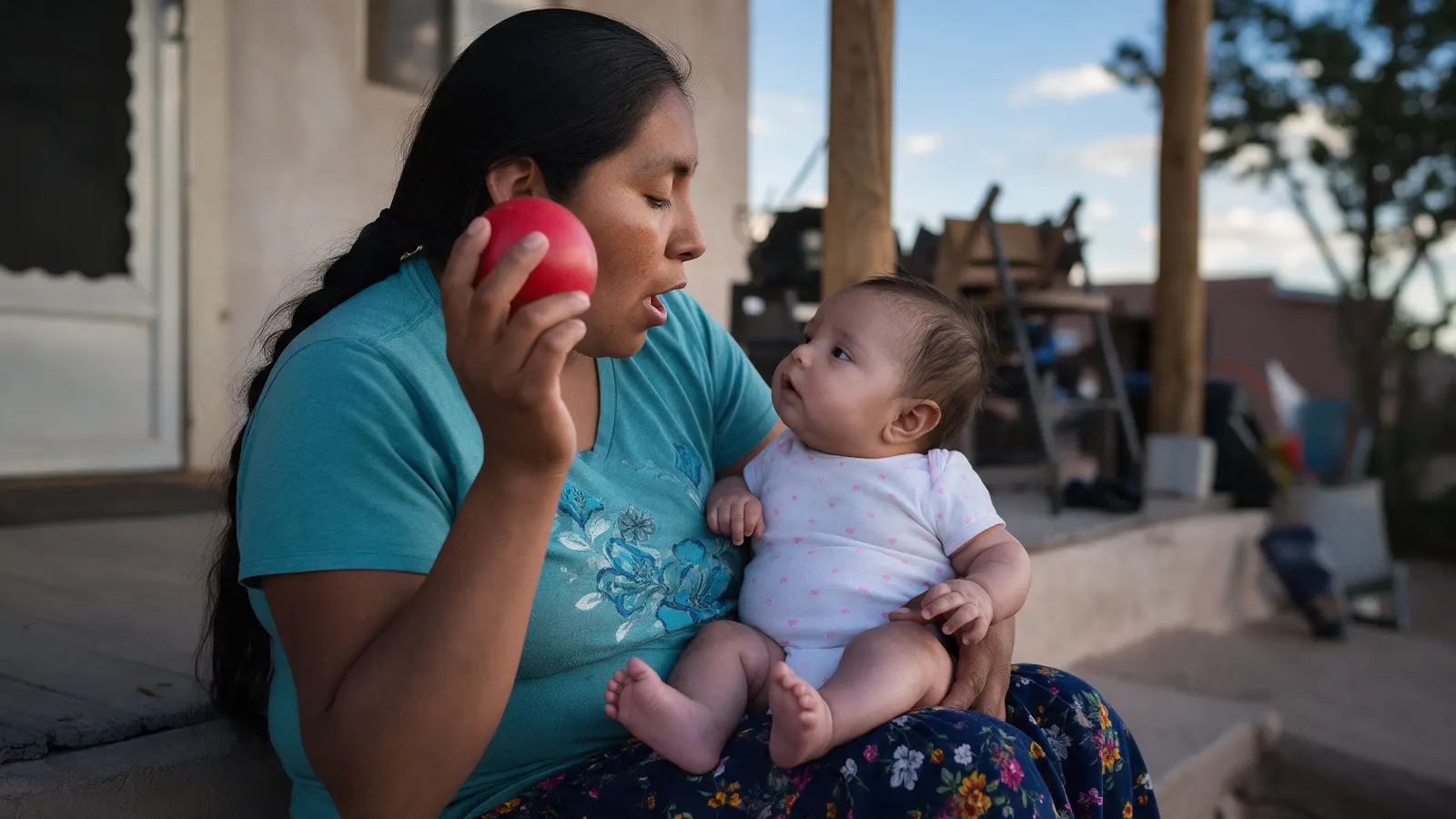
No words yet. But the work of words is happening every time you answer.
Heart
When your baby babbles or gestures and you answer with eye contact, words, or a hug, that back-and-forth, called serve and return, helps build connections in the brain (Harvard Center on the Developing Child). The AAP's version is concrete: when your baby lands on a syllable like "bah," say it back, then add words with that sound, like "ball" and "box" (AAP). And name what your baby looks at, all day long (CDC). "Ba-ba-ba! You said 'ba.' Ball! Here's your ball." Then the pause, which is their turn.
Head
Baby sign language is popular, and the first randomized trial is worth knowing. It followed 40 babies from 8 to 20 months, and encouraging gestures didn't speed up language. What did change: mothers who used signs became more responsive to their babies' cues (Kirk et al., 2013). Sign if you enjoy it; talking is what builds language. The same logic rules out the apps. CDC doesn't recommend screen time before age 2, with video calls to loved ones as the exception (CDC), and the AAP says babies under 18 months learn best from real-world interactions (Munzer, AAP). The ball in your hand beats the ball on a screen.
Body
Understanding runs ahead of speaking. In lab tests, 4.5-month-olds already recognized the sound of their own name (Mandel et al., 1995), though looking when you call their name is a 9-month milestone (CDC). So the words you say over the high chair are landing before anything comes back. The words before words section of the guide is the whole method: say the syllable back, add the word, pause.
Try today
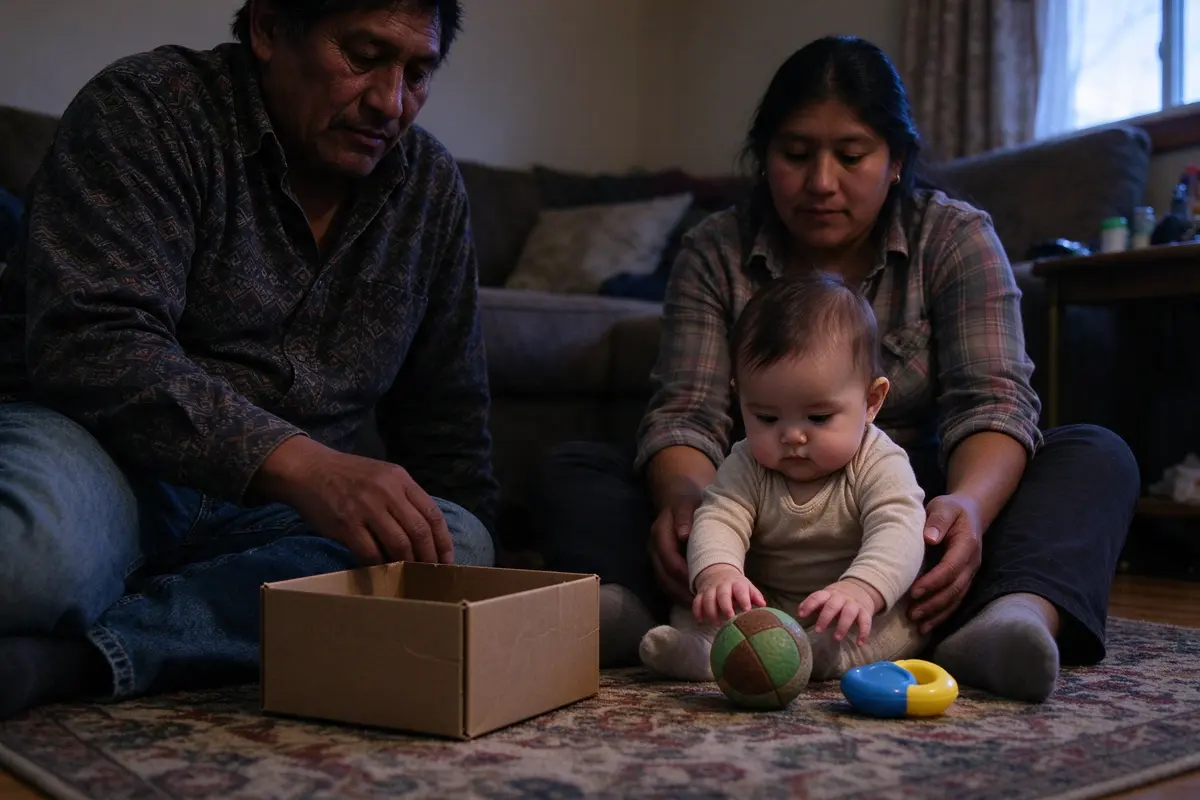
The ba-ball bridge
Time: 5 minutes, three times today · Words before words in the guide
Wait for a syllable. "Ba" is the classic; whatever comes is the one (AAP).
Say it back once: "Ba!"
Add three real words that start with it, one at a time, holding the thing if you can: "Ball. Box. Bath." (AAP).
Pause for their turn, then do it again with the next syllable that shows up (Harvard Center on the Developing Child).
Make it work:Three words, not thirty, and the pause is where the learning happens (Harvard Center on the Developing Child). "Ma" gets "mama, milk, more." "Da" gets "dada, dog, done."
Watch for
Normal
no turn toward their name yet; recognizing it in the lab came at 4.5 months, but looking when you call it is a 9-month milestone (Mandel et al., 1995; CDC).
Call your pediatrician
if your baby doesn't babble or imitate sounds by 7 months (AAP).
Normal
the same sound used for everything, all day.
Go to the ER now
for a seizure with a fever, a stiff neck, or a bulging soft spot (AAP).
Normal
a baby who babbles most at 5 a.m.
Call 911
if your baby can't be woken up, isn't moving, or has purple or blood-colored spots on the skin (AAP).
For you
Sign if you enjoy it. The mothers in that trial didn't get faster talkers, but they got more responsive, and that's a real result for the mother (Kirk et al., 2013). If a sign for "milk" makes you watch your baby's hands more closely, it has done its job. If it feels like one more thing to get right, skip it with a clear conscience.
Talking, you can't do wrong. The 5 a.m. monologue counts. The grocery-store narration counts. There's no app that beats you, and you don't need to buy anything to pass this part.
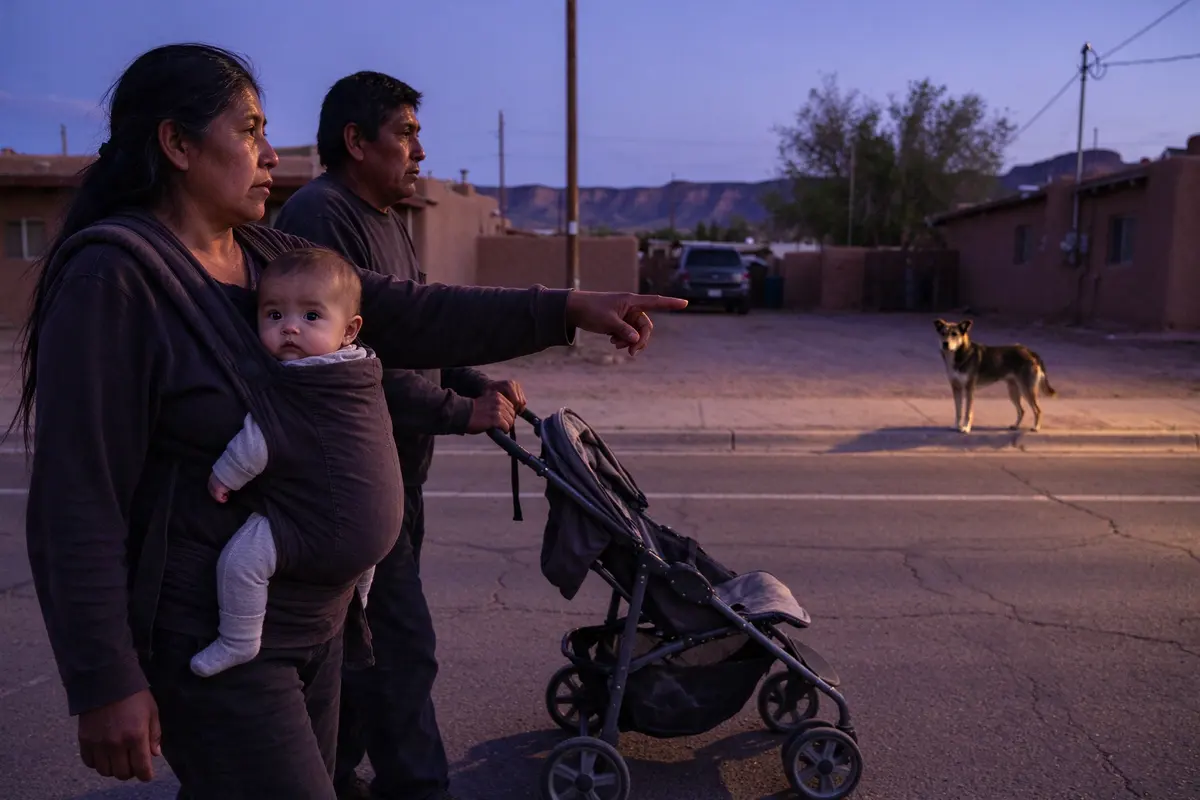
If you're the partner: three things named on the walk, every walk. "Dog. Door. Dark." That's the whole job.
Sources
- Center on the Developing Child at Harvard University. "Serve and Return." Accessed 2026. https://developingchild.harvard.edu/key-concept/serve-and-return/
- American Academy of Pediatrics. "Language Development: 4 to 7 Months." HealthyChildren.org, updated 2009. https://www.healthychildren.org/English/ages-stages/baby/Pages/Language-Development-4-to-7-Months.aspx
- Centers for Disease Control and Prevention. "Milestones by 6 Months." Learn the Signs. Act Early. program, updated 2026. https://www.cdc.gov/act-early/milestones/6-months.html
- Kirk E, Howlett N, Pine KJ, Fletcher BC. "To sign or not to sign? The impact of encouraging infants to gesture on infant language and maternal mind-mindedness." Child Development, 2013. https://pubmed.ncbi.nlm.nih.gov/23033858/
- Munzer T. "Helping Kids Thrive in a Digital World: AAP Policy Explained." HealthyChildren.org, updated 2026. https://www.healthychildren.org/English/family-life/Media/Pages/helping-kids-thrive-in-a-digital-world-AAP-policy-explained.aspx
- Mandel DR, Jusczyk PW, Pisoni DB. "Infants' recognition of the sound patterns of their own names." Psychological Science, 1995. https://pubmed.ncbi.nlm.nih.gov/25152566/
- Centers for Disease Control and Prevention. "Milestones by 9 Months." Learn the Signs. Act Early. program, updated 2026. https://www.cdc.gov/act-early/milestones/9-months.html
- American Academy of Pediatrics. "Developmental Milestones: 7 Months." HealthyChildren.org, updated 2009. https://www.healthychildren.org/English/ages-stages/baby/Pages/Developmental-Milestones-7-Months.aspx
- American Academy of Pediatrics. "Fever" (symptom checker). HealthyChildren.org, accessed 2026. https://www.healthychildren.org/English/tips-tools/symptom-checker/Pages/symptomviewer.aspx?symptom=Fever
This guide is general education that summarizes published research and guidance from groups like the American Academy of Pediatrics, the CDC, and the WHO. It isn’t medical advice, and every child develops on their own timeline. Your pediatrician knows your child; if something feels wrong, call them. In an emergency, call 911.
Get each day’s note the morning it applies
Add your baby to a free Chorevia household with their date of birth, and every morning for 300 days the day’s note arrives in the app and by email: what’s developing, one thing to try, what to watch for, and a word for you.
Create your household