Day 200 of 300 · Week 27
Day two hundred
Last reviewed · 4 min read · 12 sources · Plain-text version
Two hundred days: a first smile, a first laugh, a first roll, a first bite. The 6-month list as the frame, corrected age for babies born early, and a letter to put away.
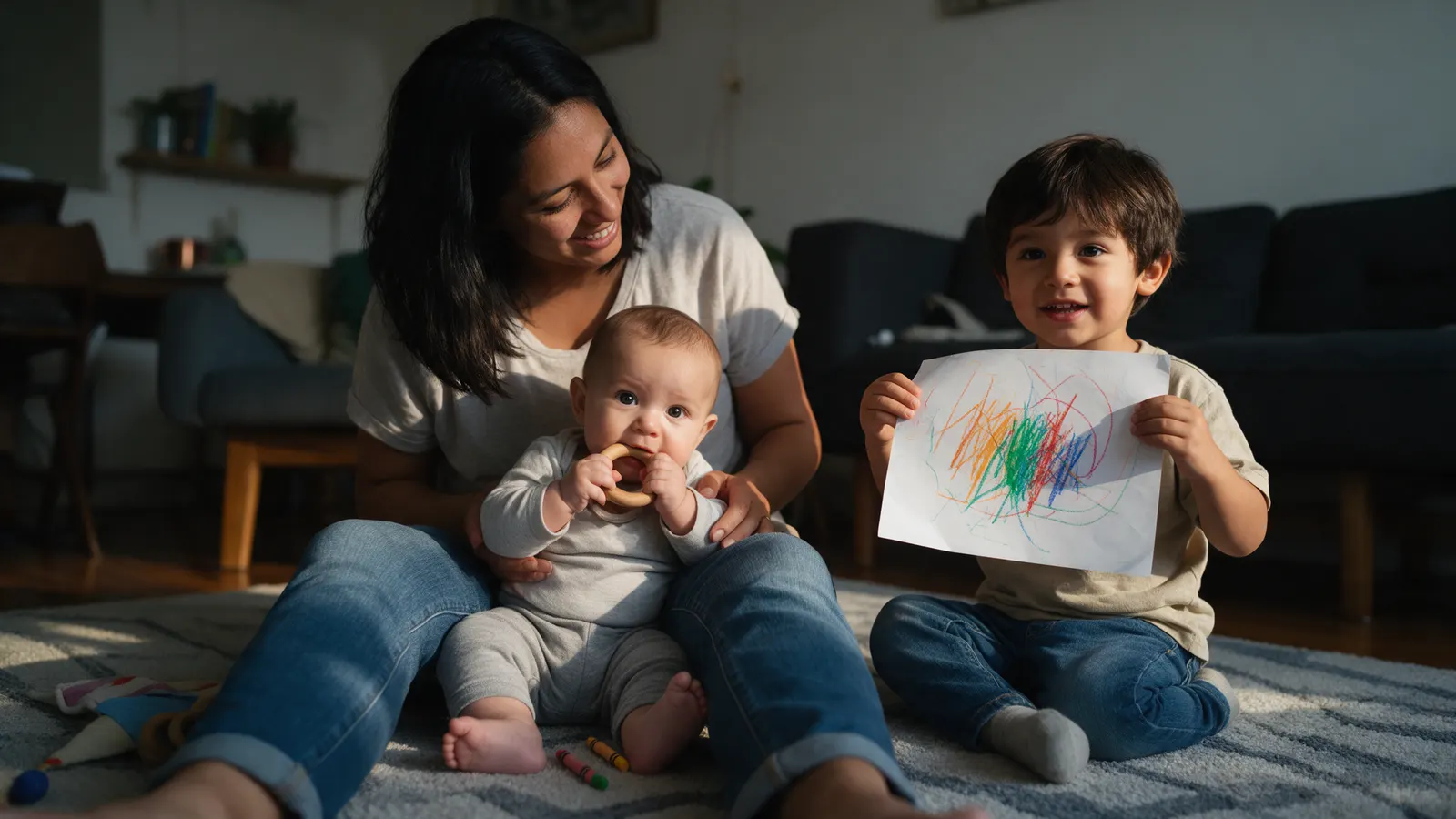
Two hundred is a round number, not a milestone. But it's a good day to look back, with the 6-month list as the frame.
Heart
By 6 months, most babies know familiar people, like to look at themselves in a mirror, and laugh; take turns making sounds with you, blow raspberries, and squeal; put things in their mouth, reach to grab a toy they want, and close their lips to show they don't want more; roll from tummy to back, push up on straight arms, and lean on their hands to hold themselves up when sitting (CDC). Read it as a description of the person on the rug, not a scorecard: the lists name skills that at least 75% of babies show by each age, so a missed one is a reason to check in, not to wait and see (Zubler et al., 2022). Born early? Use corrected age, age minus the weeks they were born early, for milestones until age 2 (AAP).
Head
Two hundred days ago, a newborn who couldn't hold their head up. Since then: a first smile, a first laugh, a first roll, and this month a first bite, probably with a face. In one trial, babies kept grimacing at green beans for 8 days and ate more of them anyway (Forestell & Mennella, 2007). Ahead, on the 9-month list: sitting without support, passing things hand to hand, looking for a dropped toy, and being shy or clingy with strangers (CDC). The 9-month visit brings a full exam and questions about sleep and pulling to stand (AAP); the next guide covers it.
Body
On day 200, most babies have doubled their birth weight (AAP), still running on breast milk or formula as the most important source of nutrition, with solids as practice (CDC), and sleeping, in theory, 12 to 16 hours in 24, naps included (Paruthi et al., 2016). Nothing new to add today; today you write it down.
Try today
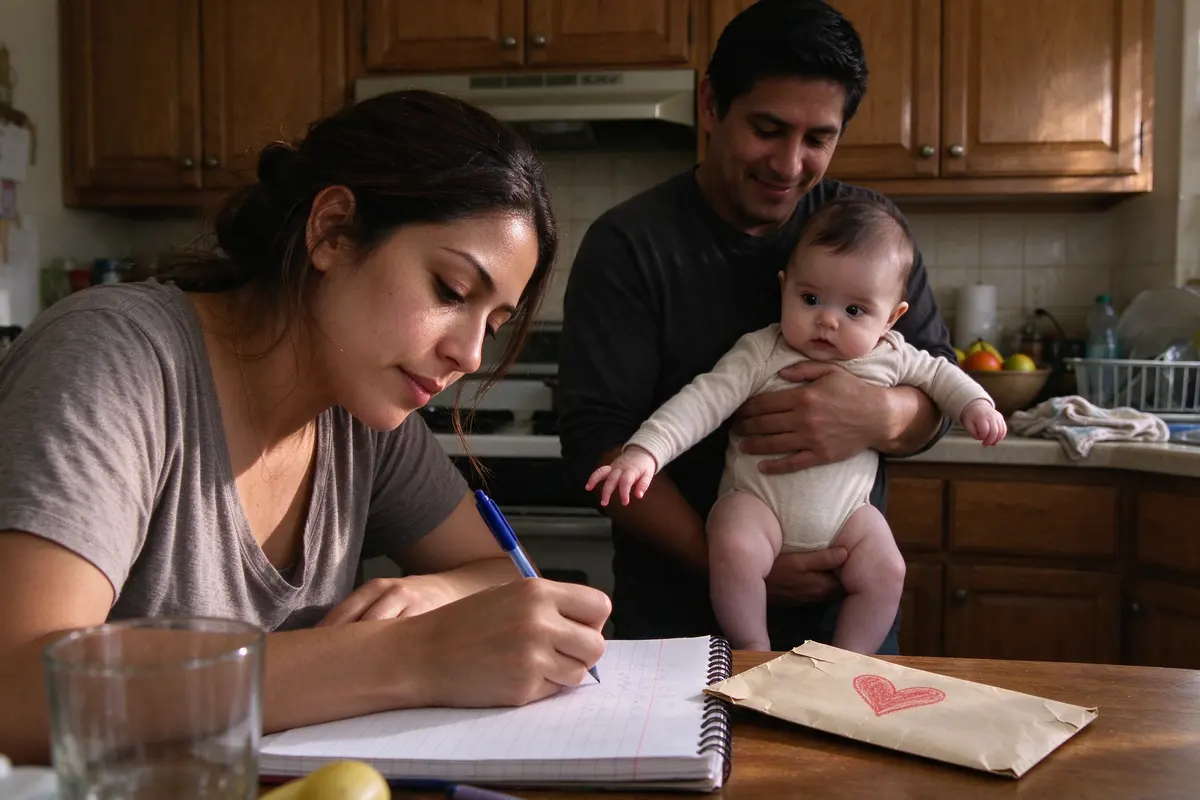
The two-hundred-day letter
Time: 15 minutes, with the six-month letter beside it
Date the page: day 200, and your baby's age in weeks, with their corrected age too if they were born early (AAP).
Write four firsts and roughly when they came: the smile, the laugh, the roll, the bite. Nobody is scoring.
Write one thing your baby does that no list has: the noise they make at the cat, the spoon held upside down.
Write one line about yourself on day 200. Then seal it with the six-month letter and the videos.
Make it work:A list of firsts isn't a checklist. If one hasn't happened, write "not yet" and the date. The CDC's lists exist so you can ask, not so you can grade (Zubler et al., 2022).
Watch for
Normal
one thing on the 6-month list not there yet while everything else is.
Call your pediatrician
and ask about developmental screening rather than waiting; your state's early intervention program offers a free evaluation without a referral (CDC).
Normal
a stuffy nose that comes and goes with the season.
Call your pediatrician within a day
if a fever has lasted more than 48 hours with no other symptoms, or any fever for more than 3 days (AAP).
Normal
a fussier day after a new skill.
Call your pediatrician right away
if your baby looks or acts very sick, or you think they need to be seen urgently (AAP).
Normal
knowing this baby better than anyone alive.
Call anyway
if your baby just doesn't seem right to you. Trust your instincts; two hundred days have trained them (Lurie Children's).
For you
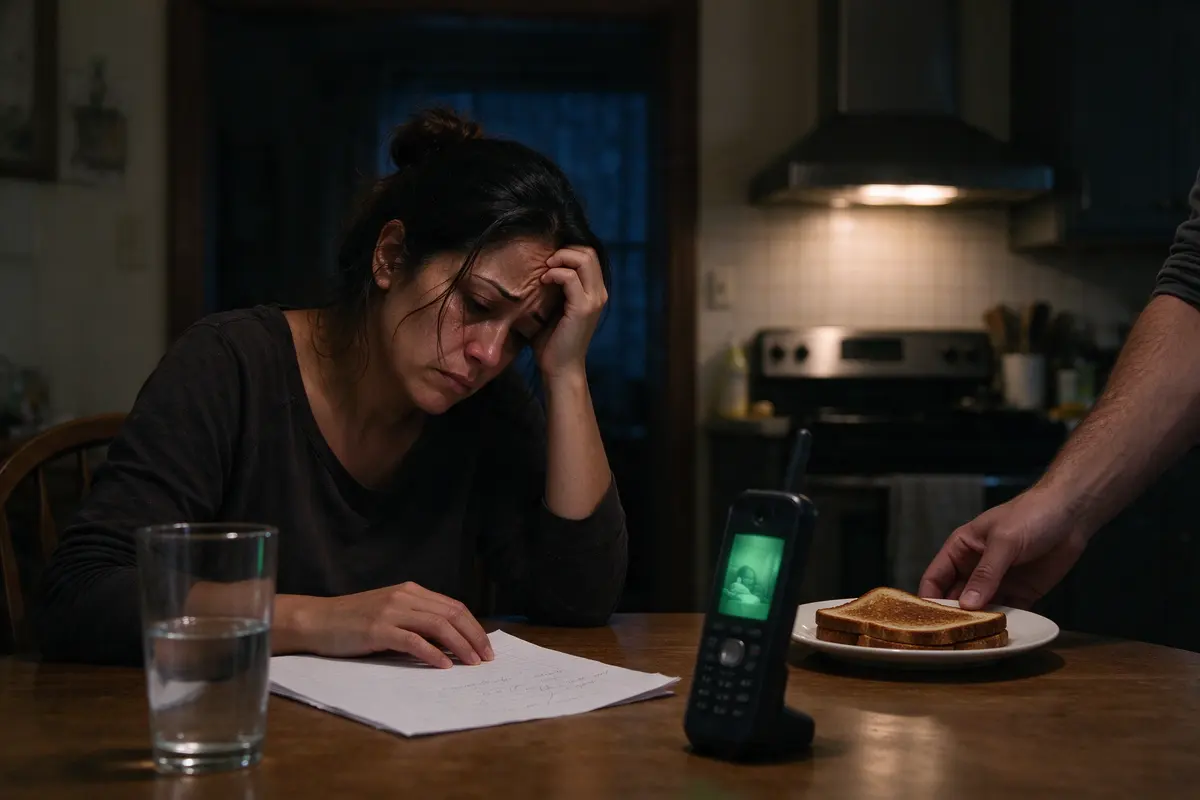
The letter to yourself. Step 4 was one line; give it a page tonight. Day 1 you, day 200 you: what you can do now that you couldn't, what you stopped worrying about, what you still carry. No grades. "Not yet" is an honest entry here too.
One line belongs on that page whether or not you need it today: if sadness lasts more than two weeks, go to the doctor, don't wait for a visit (OWH). Written down, the day-250 you won't have to remember it.
If you're the partner: write your own page. One line is about her; read that one out loud.
Sources
- Centers for Disease Control and Prevention. "Milestones by 6 Months." Learn the Signs. Act Early. program, updated 2026. https://www.cdc.gov/act-early/milestones/6-months.html
- Zubler JM, Wiggins LD, Macias MM, et al. "Evidence-Informed Milestones for Developmental Surveillance Tools." Pediatrics, 2022. https://pubmed.ncbi.nlm.nih.gov/35132439/
- American Academy of Pediatrics. "Corrected Age For Preemies." HealthyChildren.org, accessed 2026. https://www.healthychildren.org/English/ages-stages/baby/preemie/Pages/Corrected-Age-For-Preemies.aspx
- Forestell CA, Mennella JA. "Early determinants of fruit and vegetable acceptance." Pediatrics, 2007. https://pubmed.ncbi.nlm.nih.gov/18055673/
- Centers for Disease Control and Prevention. "Milestones by 9 Months." Learn the Signs. Act Early. program, updated 2026. https://www.cdc.gov/act-early/milestones/9-months.html
- American Academy of Pediatrics. "Checkup Checklist: 9 Months Old." HealthyChildren.org, updated 2021. https://www.healthychildren.org/English/ages-stages/Your-Childs-Checkups/Pages/Your-Checkup-Checklist-9-Months-Old.aspx
- American Academy of Pediatrics. "Checkup Checklist: 6 Months Old." HealthyChildren.org, updated 2023. https://www.healthychildren.org/English/ages-stages/Your-Childs-Checkups/Pages/Your-Checkup-Checklist-6-Months-Old.aspx
- Paruthi S, Brooks LJ, D'Ambrosio C, et al. "Recommended Amount of Sleep for Pediatric Populations: A Consensus Statement of the American Academy of Sleep Medicine." Journal of Clinical Sleep Medicine, 2016. https://pubmed.ncbi.nlm.nih.gov/27250809/
- Centers for Disease Control and Prevention. "Concerned About Your Child's Development?" 2026. https://www.cdc.gov/act-early/families/concerned.html
- American Academy of Pediatrics. "Fever" (symptom checker). HealthyChildren.org, accessed 2026. https://www.healthychildren.org/English/tips-tools/symptom-checker/Pages/symptomviewer.aspx?symptom=Fever
- Lurie Children's Hospital of Chicago. "When to Call the Pediatrician for Your Newborn." 2024. https://www.luriechildrens.org/en/blog/when-to-call-the-pediatrician-for-your-newborn/
- Office on Women's Health. "Recovering from birth." US Department of Health and Human Services, 2021. https://womenshealth.gov/pregnancy/childbirth-and-beyond/recovering-birth
This guide is general education that summarizes published research and guidance from groups like the American Academy of Pediatrics, the CDC, and the WHO. It isn’t medical advice, and every child develops on their own timeline. Your pediatrician knows your child; if something feels wrong, call them. In an emergency, call 911.
Get each day’s note the morning it applies
Add your baby to a free Chorevia household with their date of birth, and every morning for 300 days the day’s note arrives in the app and by email: what’s developing, one thing to try, what to watch for, and a word for you.
Create your household