Day 365 of 365 · One year
One year
Last reviewed · 5 min read · 24 sources · Plain-text version
The birthday. The 12-month list as most babies, around now; from today, whole milk, the bottle wind-down, the dentist, and the first family job. The 1-year guide is the next home; the series ends.
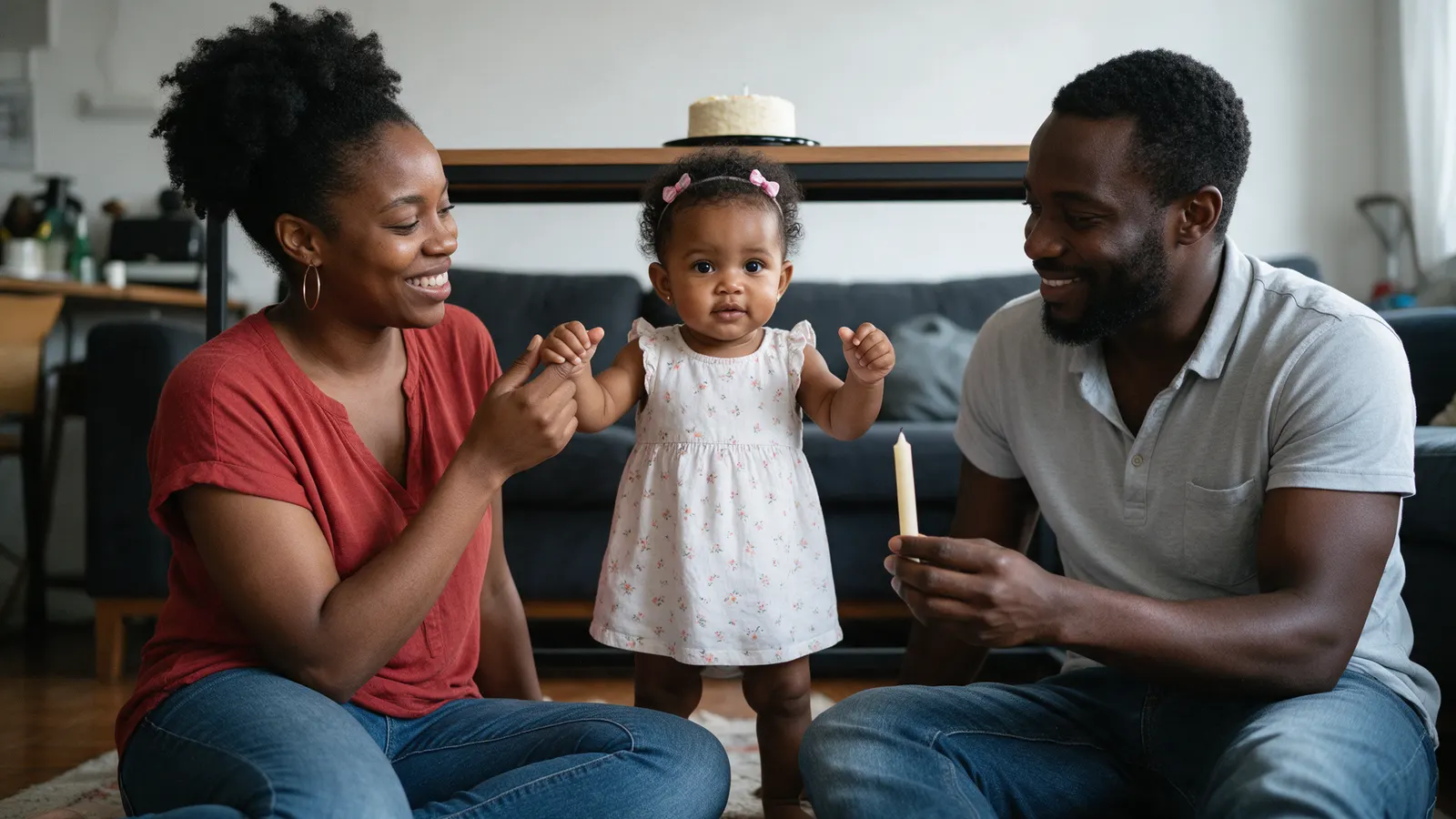
One year. Today your baby is a toddler, by the calendar if not by the feet, and this is the last note of the series: the list once more, what can start from today, one real family job, and the guide that takes over tomorrow.
Heart
Most babies, around now: play games with you like pat-a-cake, wave bye-bye, call a parent "mama," "dada," or another special name, understand "no," put something in a container, look for things they saw you hide, pull up to stand, cruise, drink from a cup you hold, and pick up small bits of food between thumb and pointer finger (CDC). The checklists hold skills at least 75% of children show by each age, so a missed one today is a reason to ask at the visit, not to worry alone (Zubler et al., 2022); born early, your baby's corrected age still counts (AAP). The look ahead is the 15-month list: a few steps alone, one or two more words, and pointing to ask (CDC).
Head
From today you can. Whole milk can start: 2 to 3 cups (16 to 24 ounces) a day until age 2, and no more than 24, because milk is low in iron and fills toddlers up (AAP; AAP), with breastfeeding alongside as long as you both want (USDA & HHS, 2026). The bottle wind-down can begin, to finish between 12 and 18 months, nap and bedtime bottles first (Shu, AAP). The dentist is due: a first visit by the first birthday or within 6 months of the first tooth (Krol & Whelan, AAP). The CDC's no-honey rule ran to 12 months (CDC). And one thing that doesn't change today: the car seat stays rear-facing until it's outgrown (AAP).
Body
The first family job. At home, most children start helping around their first birthday (Dahl, 2015), and CDC suggests including your child in everyday tasks, like fetching shoes or carrying napkins to the table (CDC). The method, from Family jobs for helpers in diapers: show, then do it together; expect "unhelpful help," which most parents of 1- to 4-year-olds report (Hammond & Brownell, 2018); thank them and describe the effort; and keep it unpaid, because toy rewards made 20-month-olds less likely to keep helping (Warneken & Tomasello, 2008). Make it a game, even if it takes longer (AAP).
Try today
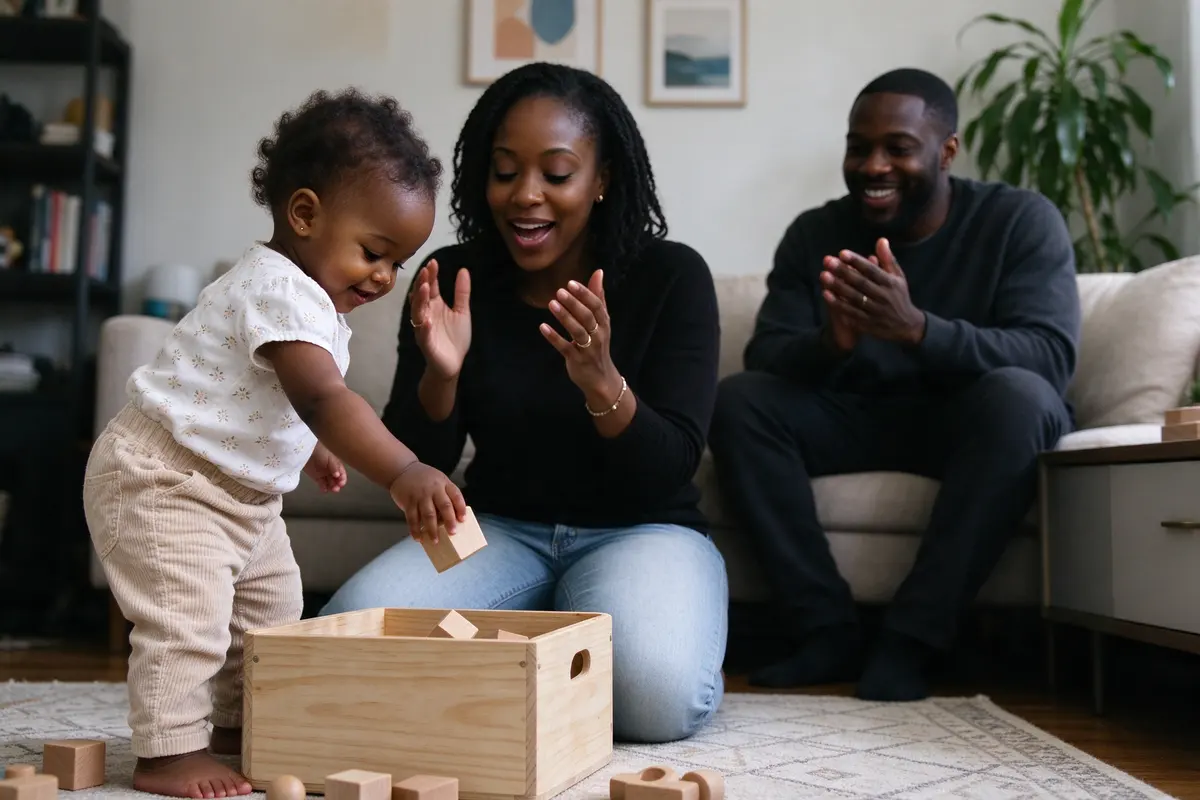
The first family job, for real
Time: 5 minutes, before the cake · Family jobs for helpers in diapers in the guide
One toy, one open bin on the floor, and the same short clean-up song from now on. Sing it, drop a toy in yourself, and say "In!"
Hand your toddler one toy and hold the bin close. Wait. A drop, a throw, or a toy that lands beside the bin all count on the first day (Hammond & Brownell, 2018).
Say thank you and describe what they did: "You put the block in the bin!" No treat, no sticker (Warneken & Tomasello, 2008).
Finish the song with a cheer, and leave it there. Tomorrow, the same job, the same song.
Make it work:Helping stays away from the stove, hot drinks, cleaning products, and buckets of water (AAP). A bin of blocks is the right first job.
Watch for
Normal
no steps alone on the birthday; walking alone ran from 8.2 to 17.6 months in the WHO's study (WHO Multicentre Growth Reference Study Group, 2006).
Ask about a developmental screening
if your toddler isn't pulling up to stand (CDC).
Normal
a pat-a-cake that's two claps and a grab for your hands.
Bring it up
if your toddler isn't playing simple games like pat-a-cake or is using few gestures by 12 months (CDC).
Normal
a wild afternoon and a toddler asleep by seven.
Call your pediatrician right away
for a fever over 104°F (40°C), and call 911 for purple or blood-colored spots on the skin with a fever (AAP).
Normal
knowing this child better than anyone alive, and better than any list.
Call anyway
if your toddler just doesn't seem right to you. Trust your instincts; a year has built them (Lurie Children's).
For you
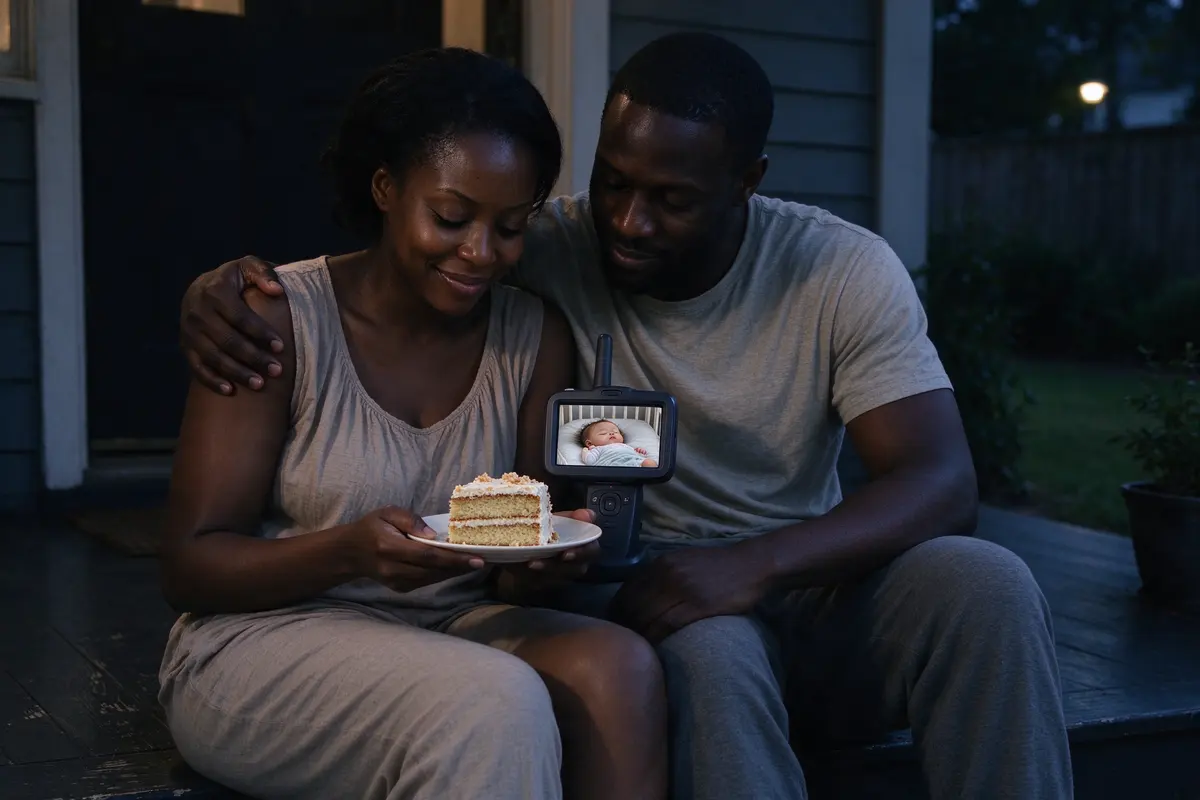
A year of this, done. Once more, lightly: the National Maternal Mental Health Hotline is 1-833-TLC-MAMA (1-833-852-6262), call or text; 988 is for anyone; in an emergency, 911 (CDC). The routine depression screens at the baby's visits ended at 6 months (Earls et al., 2019), so the watching stays yours, and the rule holds past the birthday: sadness that lasts more than two weeks is a reason to go to your own doctor without waiting (Office on Women's Health). Partners too: about 10% of fathers have depression around a birth (Paulson & Bazemore, 2010). Eat the cake on the step after bedtime; you did a year.
If you're the partner: say the thing from this year you'll still remember in twenty, out loud, tonight. Then the next home is the 1-year guide, for steps, words, tantrums, one nap, and family jobs. This series ends here, and starts again at day one for the next baby.
Sources
- Centers for Disease Control and Prevention. "Milestones by 1 Year." Learn the Signs. Act Early. program, updated 2026. https://www.cdc.gov/act-early/milestones/1-year.html
- Zubler JM, Wiggins LD, Macias MM, et al. "Evidence-Informed Milestones for Developmental Surveillance Tools." Pediatrics, 2022. https://pubmed.ncbi.nlm.nih.gov/35132439/
- American Academy of Pediatrics. "Corrected Age For Preemies." HealthyChildren.org, updated 2018. https://www.healthychildren.org/English/ages-stages/baby/preemie/Pages/Corrected-Age-For-Preemies.aspx
- Centers for Disease Control and Prevention. "Milestones by 15 Months." Learn the Signs. Act Early. program, updated 2026. https://www.cdc.gov/act-early/milestones/15-months.html
- American Academy of Pediatrics Institute for Healthy Childhood Weight. "Healthy Beverage Quick Reference Guide." 2021. https://downloads.aap.org/AAP/PDF/HealthyBeverageQuickReferenceGuideDownload.pdf
- American Academy of Pediatrics. "Iron Deficiency and Anemia in Babies, Children & Teens." HealthyChildren.org, updated 2026. https://www.healthychildren.org/English/health-issues/conditions/chronic/Pages/Anemia-and-Your-Child.aspx
- US Department of Agriculture and US Department of Health and Human Services. "Dietary Guidelines for Americans, 2025–2030." 2026. https://cdn.realfood.gov/DGA.pdf
- Shu J. "From Bottle to Cup: Helping Your Child Make a Healthy Transition." HealthyChildren.org, updated 2023. https://www.healthychildren.org/English/ages-stages/baby/feeding-nutrition/Pages/Discontinuing-the-Bottle.aspx
- Krol D, Whelan K. "Good Oral Health Starts Early: AAP Policy Explained." HealthyChildren.org, updated 2026. https://www.healthychildren.org/English/healthy-living/oral-health/Pages/Brushing-Up-on-Oral-Health-Never-Too-Early-to-Start.aspx
- Centers for Disease Control and Prevention. "Foods and Drinks to Avoid or Limit." 2026. https://www.cdc.gov/infant-toddler-nutrition/foods-and-drinks/foods-and-drinks-to-avoid-or-limit.html
- American Academy of Pediatrics. "Car Seats: Information for Families." HealthyChildren.org, updated 2026. https://www.healthychildren.org/English/safety-prevention/on-the-go/Pages/Car-Safety-Seats-Information-for-Families.aspx
- Dahl A. "The Developing Social Context of Infant Helping in Two U.S. Samples." Child Development, 2015. https://pubmed.ncbi.nlm.nih.gov/25800068/
- Hammond SI, Brownell CA. "Happily Unhelpful: Infants' Everyday Helping and its Connections to Early Prosocial Development." Frontiers in Psychology, 2018. https://pubmed.ncbi.nlm.nih.gov/30298039/
- Warneken F, Tomasello M. "Extrinsic rewards undermine altruistic tendencies in 20-month-olds." Developmental Psychology, 2008. https://pubmed.ncbi.nlm.nih.gov/18999339/
- American Academy of Pediatrics. "Social Development: 1 Year Olds." HealthyChildren.org, updated 2009. https://www.healthychildren.org/English/ages-stages/toddler/Pages/Social-Development-1-Year-Olds.aspx
- American Academy of Pediatrics. "Safety for Your Child: 1 to 2 Years." HealthyChildren.org, updated 2022. https://www.healthychildren.org/English/ages-stages/toddler/Pages/safety-for-your-child-1-to-2-years.aspx
- WHO Multicentre Growth Reference Study Group. "WHO Motor Development Study: windows of achievement for six gross motor development milestones." Acta Paediatrica Supplement, 2006. https://pubmed.ncbi.nlm.nih.gov/16817682/
- Centers for Disease Control and Prevention. "Signs and Symptoms of Autism Spectrum Disorder." 2024. https://www.cdc.gov/autism/signs-symptoms/index.html
- American Academy of Pediatrics. "Fever" (symptom checker). HealthyChildren.org, accessed 2026. https://www.healthychildren.org/English/tips-tools/symptom-checker/Pages/symptomviewer.aspx?symptom=Fever
- Latimer T. "When to Call the Pediatrician for Your Newborn." Lurie Children's Hospital of Chicago, 2022. https://www.luriechildrens.org/en/blog/when-to-call-the-pediatrician-for-your-newborn/
- Centers for Disease Control and Prevention. "Symptoms of Depression Among Women." 2024. https://www.cdc.gov/reproductive-health/depression/index.html
- Earls MF, Yogman MW, Mattson G, Rafferty J; AAP Committee on Psychosocial Aspects of Child and Family Health. "Incorporating Recognition and Management of Perinatal Depression Into Pediatric Practice." Pediatrics, 2019. https://pubmed.ncbi.nlm.nih.gov/30559120/
- Office on Women's Health. "Recovering from birth." US Department of Health and Human Services, 2021. https://womenshealth.gov/pregnancy/childbirth-and-beyond/recovering-birth
- Paulson JF, Bazemore SD. "Prenatal and postpartum depression in fathers and its association with maternal depression: a meta-analysis." JAMA, 2010. https://pubmed.ncbi.nlm.nih.gov/20483973/
This guide is general education that summarizes published research and guidance from groups like the American Academy of Pediatrics, the CDC, and the WHO. It isn’t medical advice, and every child develops on their own timeline. Your pediatrician knows your child; if something feels wrong, call them. In an emergency, call 911.
Get each day’s note the morning it applies
Add your baby to a free Chorevia household with their date of birth, and every morning for 365 days the day’s note arrives in the app and by email: what’s developing, one thing to try, what to watch for, and a word for you.
Create your household