Day 340 of 365 · Week 46
The pincer and the cup
Last reviewed · 4 min read · 8 sources · Plain-text version
Picking up small bits of food between thumb and finger, and drinking from a cup without a lid as you hold it, are both 1-year milestones. An open cup, your hands on it, three sips. The held-cup sip.
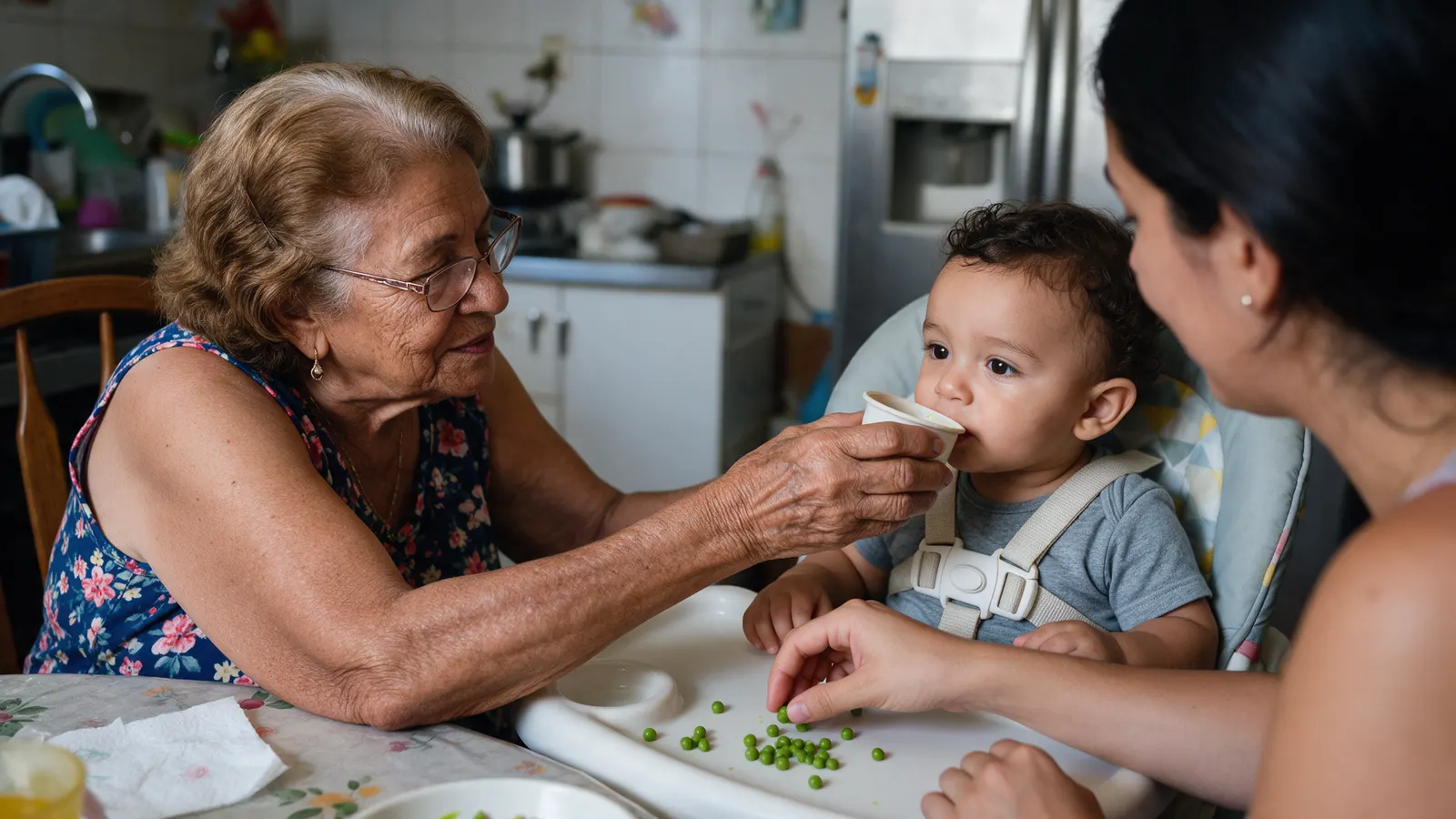
Two of the 1-year list's movement items are about meals: the pincer and the cup. Both are messy, both are practice, and both happen with you right there. Today is three sips from an open cup, your hands around it.
Heart
By 1 year, most babies pick up small bits of food between thumb and pointer finger, and drink from a cup without a lid as you hold it (CDC). Early in this stage, your baby rakes things in with the whole hand; by the end, most pinch with thumb and finger and practice on anything small, from cereal to dust balls (AAP). The cup is on the list as a held cup: you hold it, they drink, and most of the water goes on the bib.
Head
The guide's cup advice: offer a cup at meals now, and an open cup, a straw cup, or a sippy cup without a valve all work (Shu, AAP). Breast milk or formula is still the main drink, plus 4 to 8 ounces of water a day (Muth, AAP). Cow's milk as a drink waits for the birthday: around 12 months, most babies can switch to whole cow's milk, and before that, the AAP says babies shouldn't drink cow's milk or other milk substitutes (AAP). So what's in today's cup is water, and the cup is practice for everything that goes in it after the birthday, when the move off bottles finishes sometime between 12 and 18 months (Shu, AAP).
Body
The pincer side of the meal is the guide's Pincer picking: a few soft pieces of food on the tray, like cooked peas or bits of banana, named as they eat them (CDC), with pieces soft and no larger than half an inch, and you with your baby the whole time they eat (AAP). The high chair harness is on before the tray goes on; a baby who pulls up at the sofa can stand up in a chair. The cup comes before the food, while the mouth is empty and the hands are still interested.
Try today
The held-cup sip
Time: 1 minute, at one meal today · Cups in, bottles out in the guide
A small open cup with an inch of water in it, your baby in the high chair, harness on, before the food.
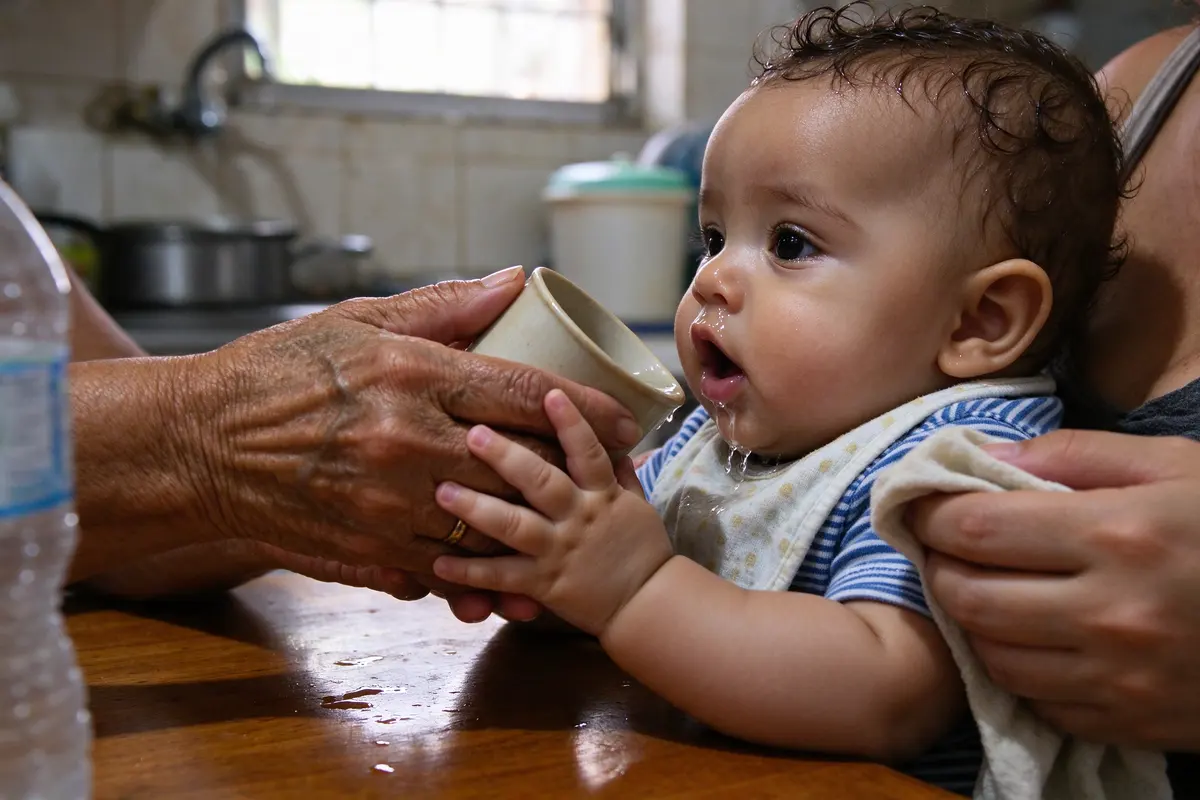
Hold the cup in both hands and bring it to their lower lip. Tilt slowly until the water touches, then stop. Let them do the sip (CDC).
Three sips, with a pause between each, and their hands over yours if they reach for it. Then the cup goes down and the peas come out (Muth, AAP).
The spill goes on the bib, the tray, and you. Say "water" each time, and that's the lesson done.
Make it work:Water only in the cup today. Milk in a cup comes with the birthday and the plan you'll make with the pediatrician (AAP).
Watch for
Normal
Call your pediatrician right away
if your baby has great trouble swallowing fluids or spit (AAP).
Normal
peas squashed flat and eaten off the thumb.
Call 911
if your baby is choking and can't breathe, cry, or make noise, turns bluish, or goes limp, and start back blows and chest thrusts while someone calls (AAP).
Normal
a cough and a splutter at the first sip, then a reach for more.
Call your pediatrician right away
for signs of dehydration: no urine in more than 8 hours, dark urine, a very dry mouth, and no tears (AAP).
For you
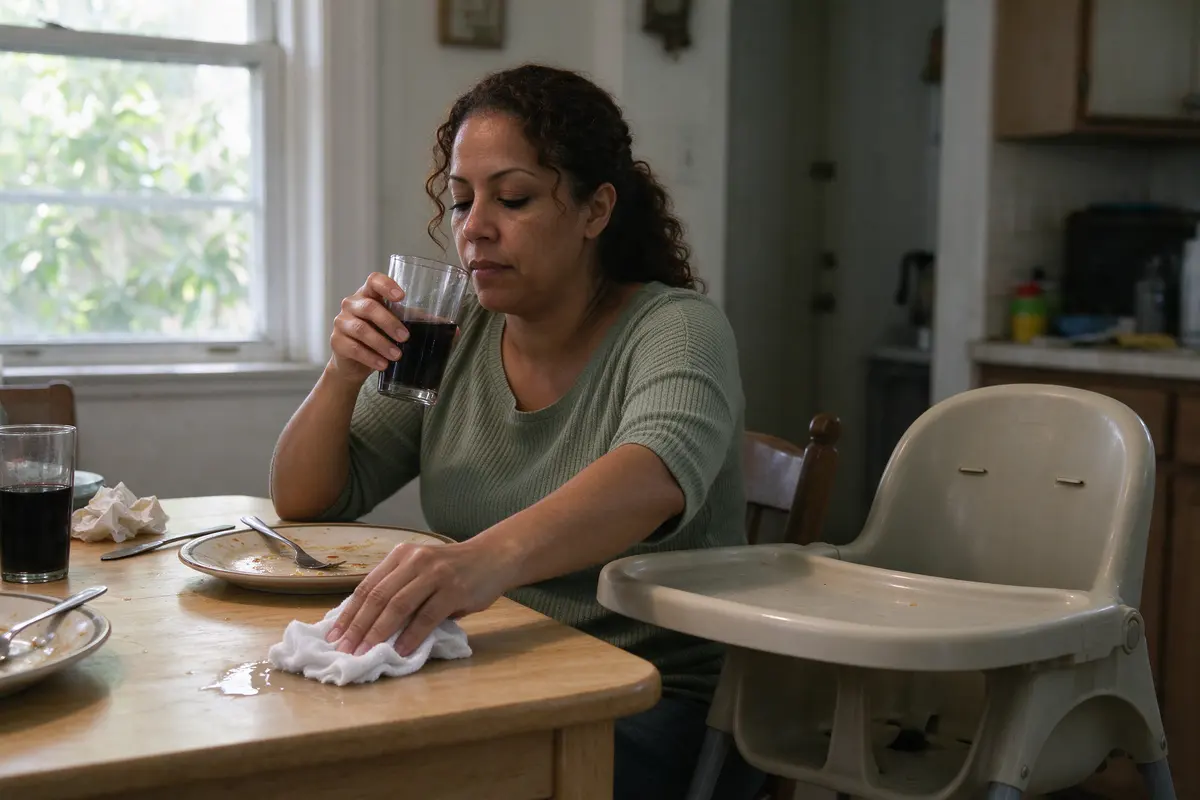
The spill is the practice. There's no version of an open cup at eleven months that stays off the bib, and the AAP's list of cups that work has the open one on it on purpose (Shu, AAP), because the tilt, the sip, and the stop get learned by being done wrong. Put the cup on the tray and not on your side of the table, and the cloth beside it. The same goes for the peas under the chair: the pincer practices on anything small (AAP), and the floor is where the practice lands. Sweep once after the meal, not during it, and drink your own glass of water while you're sitting down, which you are, for once.
If you're the partner: your hands on the cup at dinner. Three sips, no more, and the bib goes in the wash without comment.
Sources
- Centers for Disease Control and Prevention. "Milestones by 1 Year." Learn the Signs. Act Early. program, updated 2026. https://www.cdc.gov/act-early/milestones/1-year.html
- American Academy of Pediatrics. "Hand and Finger Skills." HealthyChildren.org, updated 2009. https://www.healthychildren.org/English/ages-stages/baby/Pages/Hand-and-Finger-Skills.aspx
- Shu J. "From Bottle to Cup: Helping Your Child Make a Healthy Transition." HealthyChildren.org, updated 2023. https://www.healthychildren.org/English/ages-stages/baby/feeding-nutrition/Pages/Discontinuing-the-Bottle.aspx
- Muth ND. "Recommended Drinks for Children Age 5 & Younger." HealthyChildren.org, updated 2023. https://www.healthychildren.org/English/healthy-living/nutrition/Pages/Recommended-Drinks-for-Young-Children-Ages-0-5.aspx
- American Academy of Pediatrics. "Why Do Infants Need Baby Formula Instead of Cow's Milk?" HealthyChildren.org, updated 2024. https://www.healthychildren.org/English/ages-stages/baby/formula-feeding/Pages/Why-Formula-Instead-of-Cows-Milk.aspx
- Bradin S. "Choking Prevention for Babies & Children: What Every Parent Needs to Know." HealthyChildren.org, updated 2026. https://www.healthychildren.org/English/health-issues/injuries-emergencies/Pages/Choking-Prevention.aspx
- Centers for Disease Control and Prevention. "Milestones by 18 Months." Learn the Signs. Act Early. program, updated 2026. https://www.cdc.gov/act-early/milestones/18-months.html
- American Academy of Pediatrics. "Fever" (symptom checker). HealthyChildren.org, accessed 2026. https://www.healthychildren.org/English/tips-tools/symptom-checker/Pages/symptomviewer.aspx?symptom=Fever
This guide is general education that summarizes published research and guidance from groups like the American Academy of Pediatrics, the CDC, and the WHO. It isn’t medical advice, and every child develops on their own timeline. Your pediatrician knows your child; if something feels wrong, call them. In an emergency, call 911.
Get each day’s note the morning it applies
Add your baby to a free Chorevia household with their date of birth, and every morning for 365 days the day’s note arrives in the app and by email: what’s developing, one thing to try, what to watch for, and a word for you.
Create your household