Day 349 of 365 · Week 47
Sleep near one
Last reviewed · 4 min read · 14 sources · Plain-text version
Twelve to 16 hours a day until the birthday, then 11 to 14; two naps for now, one after 15 months; separation waking. The routine, written on a card for the sitter and the grandparents.
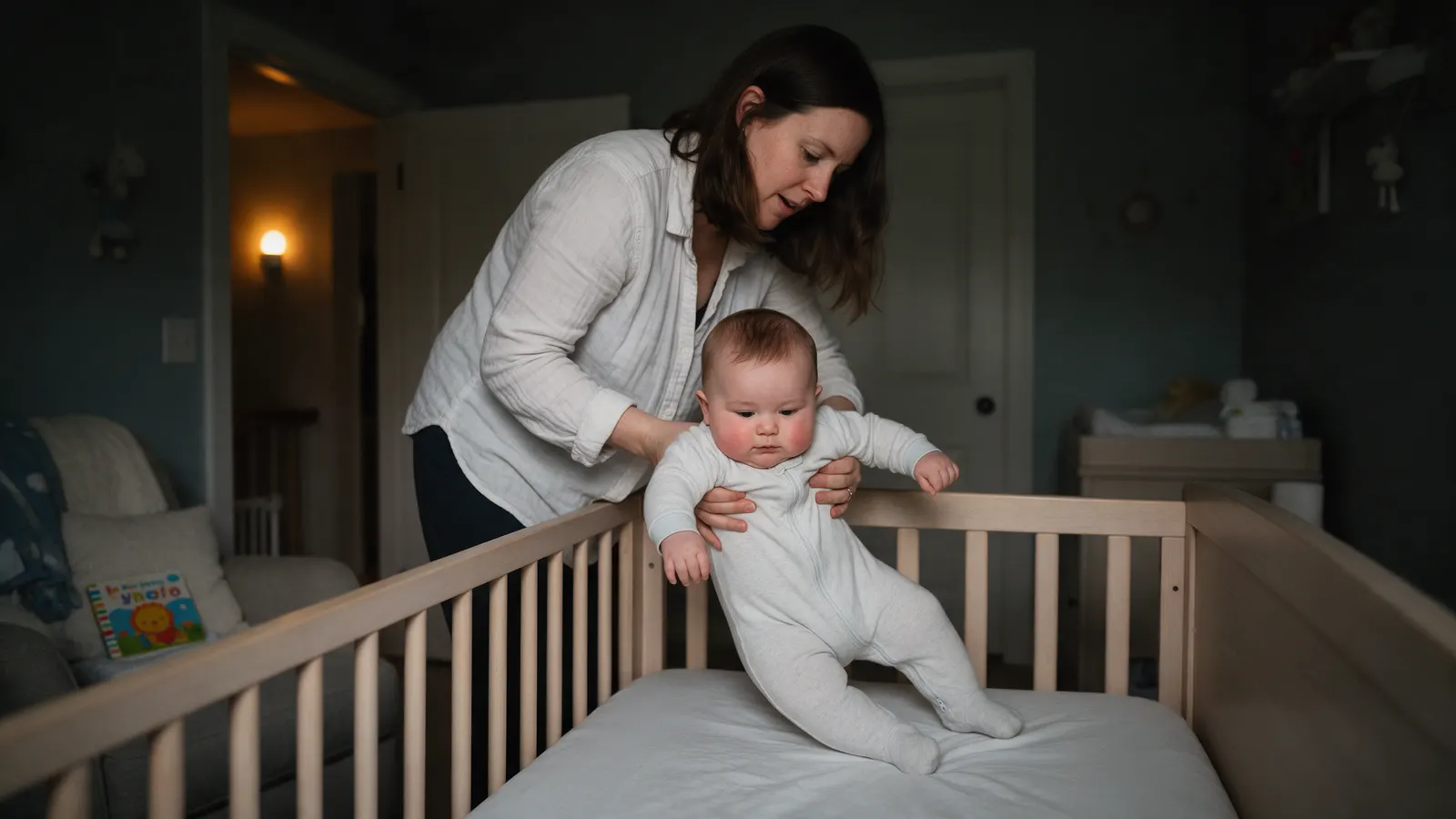
Sixteen days from the birthday, the sleep numbers are about to change on paper and barely at all in the house. Today is what stays the same, what shifts in the months after the party, and the routine written down so someone else can run it.
Heart
Babies 4 to 12 months need 12 to 16 hours of sleep a day, naps included (CDC; WHO), usually 9 to 12 hours at night plus two naps (Nemours KidsHealth). From the birthday, the WHO's number for ages 1 to 2 is 11 to 14 hours, with regular sleep and wake times (WHO). The naps stay for a while: in a study that followed 172 children, two naps a day were well established by 9 to 12 months, and one afternoon nap by 15 to 24 months (Weissbluth, 1995). Fewer than 2.5% of children stop napping before age 2 (Staton et al., 2020).
Head
What wakes a baby this age is often not sleep at all. Separation anxiety can bring back night waking (AAP); the move is to reassure quietly, then leave (Nemours KidsHealth). The routine is the other half: a bath, then stories or songs, and down drowsy but awake (Nemours KidsHealth). In a 3-week trial of 405 families with children 7 to 36 months old, a consistent nightly routine helped children fall asleep faster and wake less, and mothers' moods improved (Mindell et al., 2009). The guide's section is Naps, nights, and night feeds.
Body
The crib rules run to the birthday and past it. Place your baby on their back for every sleep until age 1 (AAP); if they roll both ways on their own, you don't need to flip them back, but the crib stays bare, with no pillows, blankets, bumpers, or stuffed toys (Moon, AAP). The mattress is at its lowest and cords are well away (AAP). The crib itself has a long way to go: the AAP's cue to move to another bed is 35 inches tall (AAP).
Try today
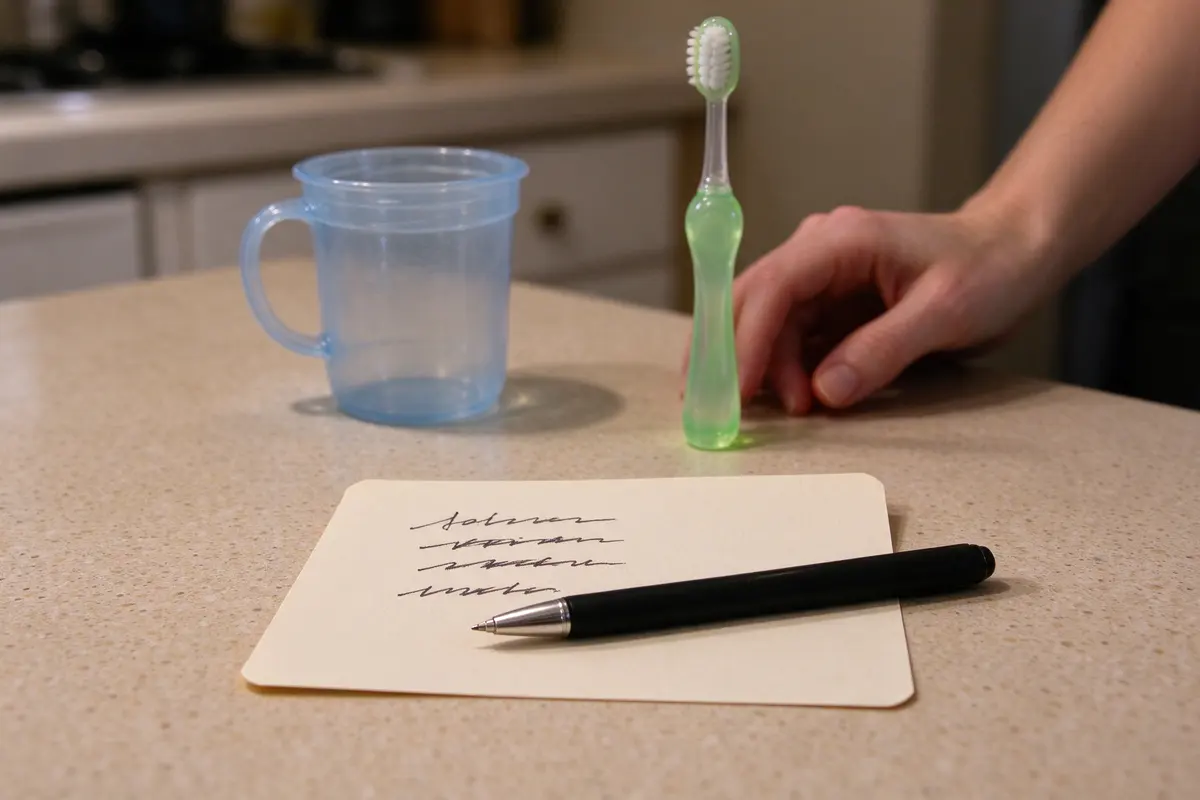
The routine, written
Time: 10 minutes, one index card · Naps, bedtime, and night waking in the guide
Write tonight's routine as a few short lines with a time beside each: bath, brush, book, the song, down awake (Nemours KidsHealth; AAP).
Add the goodnight words you actually say, exactly, so a grandparent says them too.
Add one line for a waking: "Go in, one quiet sentence, a hand on the back, out" (Nemours KidsHealth).
Add the crib rules in one line: on the back, nothing in the crib, mattress stays low (Moon, AAP).
Tape it inside the kitchen cabinet nearest the nursery, where the sitter will look.
Make it work:The card is for whoever isn't you. Tomorrow it gets a second side.
Watch for
Normal
a long morning nap and a short, loud afternoon one, in a day that still adds up to the range (Nemours KidsHealth).
Call 911
if your baby is struggling for each breath or can barely cry (AAP).
Normal
standing in the crib at 5 a.m., shouting, then sitting and sleeping again; a baby who gets stuck standing can be shown how to bend their knees to sit down (AAP).
Go to the ER now
if your baby is hard to wake, isn't alert when awake, or seems confused (AAP).
Normal
a week of wakings that line up with a new sitter or a clingy day; separation anxiety and night waking travel together (AAP).
Call your pediatrician right away
if your baby cries nonstop, or cries when touched or moved (AAP).
For you
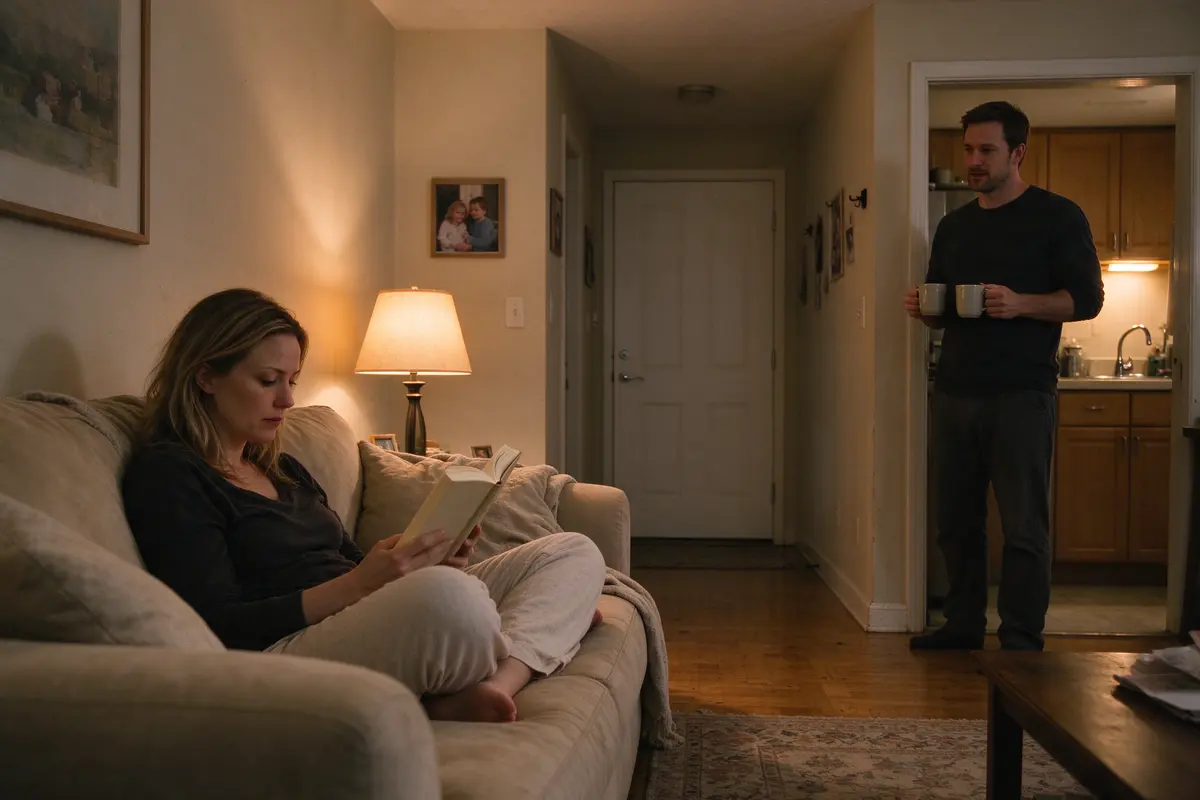
The routine is for your evening too. In the trial, it was the mothers' moods that improved alongside the children's sleep (Mindell et al., 2009), and the reason is on the card: a bedtime that runs the same way every night ends at the same time every night, and the hour after it is yours to plan. If the nights are still breaking you with the birthday in sight, that's not a routine problem; a sadness that has lasted more than two weeks is a reason to see your own doctor, without waiting (Office on Women's Health).
If you're the partner: the card means you can run bedtime without asking how. Alternate nights, starting tonight.
Sources
- Centers for Disease Control and Prevention. "Milestones by 9 Months." Learn the Signs. Act Early. program, updated 2026. https://www.cdc.gov/act-early/milestones/9-months.html
- World Health Organization. "To grow up healthy, children need to sit less and play more." 2019. https://www.who.int/news/item/24-04-2019-to-grow-up-healthy-children-need-to-sit-less-and-play-more
- Nemours KidsHealth. "Baby Sleep: 8- to 12-Month-Olds." Reviewed 2025. https://kidshealth.org/en/parents/sleep812m.html
- Weissbluth M. "Naps in children: 6 months-7 years." Sleep, 1995. https://pubmed.ncbi.nlm.nih.gov/7792496/
- Staton S, Rankin PS, Harding M, et al. "Many naps, one nap, none: A systematic review and meta-analysis of napping patterns in children 0-12 years." Sleep Medicine Reviews, 2020. https://pubmed.ncbi.nlm.nih.gov/31862445/
- American Academy of Pediatrics. "Separation Anxiety & Sleeping Trouble in Young Children." HealthyChildren.org, updated 2022. https://www.healthychildren.org/English/healthy-living/sleep/Pages/separation-anxiety-and-sleeping.aspx
- Mindell JA, Telofski LS, Wiegand B, Kurtz ES. "A nightly bedtime routine: impact on sleep in young children and maternal mood." Sleep, 2009. https://pubmed.ncbi.nlm.nih.gov/19480226/
- American Academy of Pediatrics. "Getting Your Baby to Sleep." HealthyChildren.org, updated 2024. https://www.healthychildren.org/English/ages-stages/baby/sleep/Pages/getting-your-baby-to-sleep.aspx
- Moon RY. "How to Keep Your Sleeping Baby Safe: AAP Policy Explained." HealthyChildren.org, updated 2026. https://www.healthychildren.org/English/ages-stages/baby/sleep/Pages/a-parents-guide-to-safe-sleep.aspx
- American Academy of Pediatrics. "Make Baby's Room Safe: Parent Checklist." HealthyChildren.org, updated 2020. https://www.healthychildren.org/English/safety-prevention/at-home/Pages/Make-Babys-Room-Safe.aspx
- American Academy of Pediatrics. "Brush, Book, Bed: How to Structure Your Child's Nighttime Routine." HealthyChildren.org, updated 2024. https://www.healthychildren.org/English/healthy-living/oral-health/Pages/Brush-Book-Bed.aspx
- American Academy of Pediatrics. "Fever" (symptom checker). HealthyChildren.org, accessed 2026. https://www.healthychildren.org/English/tips-tools/symptom-checker/Pages/symptomviewer.aspx?symptom=Fever
- American Academy of Pediatrics. "Movement Milestones in Babies 8 to 12 Months Old." HealthyChildren.org, updated 2021. https://www.healthychildren.org/English/ages-stages/baby/Pages/Movement-8-to-12-Months.aspx
- Office on Women's Health. "Recovering from birth." US Department of Health and Human Services, 2021. https://womenshealth.gov/pregnancy/childbirth-and-beyond/recovering-birth
This guide is general education that summarizes published research and guidance from groups like the American Academy of Pediatrics, the CDC, and the WHO. It isn’t medical advice, and every child develops on their own timeline. Your pediatrician knows your child; if something feels wrong, call them. In an emergency, call 911.
Get each day’s note the morning it applies
Add your baby to a free Chorevia household with their date of birth, and every morning for 365 days the day’s note arrives in the app and by email: what’s developing, one thing to try, what to watch for, and a word for you.
Create your household